3D wall art is wall décor with physical depth — artwork that projects outward from the wall surface rather than lying flat like a print or painting. Common forms include sculpted wall panels (wood, metal, gypsum, MDF), textured canvas with raised brushwork or plaster, metal wall sculptures, carved wood panels, capiz shell installations, and mixed-media pieces using resin, ceramic, or fabric. Unlike flat art, 3D wall art interacts with light throughout the day — raised areas catch highlights while recessed areas cast shadows, giving the piece a dynamic, almost living quality that changes as room light shifts. This is a defining trend for 2026 as Filipino homes move away from flat smooth surfaces toward tactile, sculptural finishes.
How 3D Wall Art is Different from Flat Art and Wallpaper
The distinction is physical, not visual.
- Flat Wall Art — prints, paintings, and posters that sit flush against the wall. Depth, if any, is illusory (perspective, shading).
- 3D Wallpaper or Wall Panels — covers larger wall surfaces with embossed, fluted, or relief patterns. Architectural rather than decorative.
- 3D Wall Art — discrete pieces (single panels, sculptural arrangements) that project from the wall, framed or unframed. Decorative rather than architectural.
The most useful test: if you can run your fingers across the surface and feel raised areas, recessed areas, or projecting elements, it's 3D wall art. A textured-effect print on flat canvas isn't.
Common Materials and Finishes
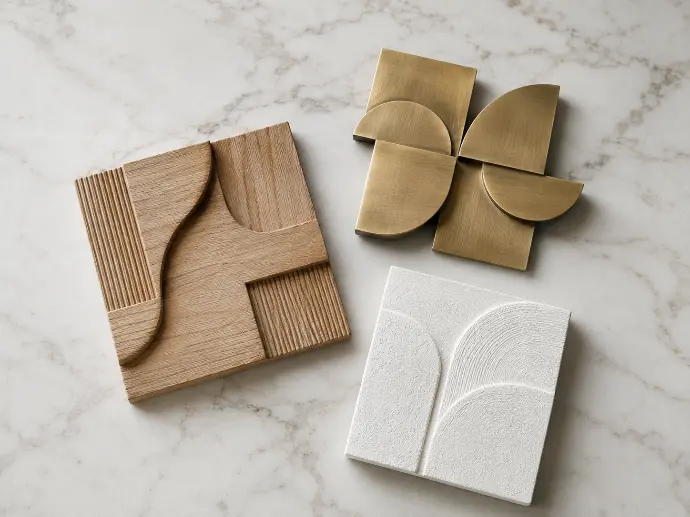
3D wall art exists across nearly every material category. The most common in 2026:
Wood — Carved or layered panels in narra, mahogany, acacia, oak, or walnut. Warm, organic, and well-suited to modern, Scandinavian, Japandi, and modern-Filipino interiors. Mandalas, geometric carvings, and organic shapes are the most common motifs.
Metal — Galvanized steel, copper, brass, and aluminum sculptures, usually in gold, bronze, black matte, or brushed finishes. Adds a sleek, contemporary, hotel-lobby quality. Best in modern interiors with clean lines.
Textured Canvas — Conventional canvas built up with thick paint (impasto), palette-knife marks, plaster, acrylic medium, or layered brushwork. The most accessible entry point into 3D wall art for buyers transitioning from flat prints.
Capiz (Mother of Pearl) — A distinctly Filipino material. Translucent shell tiles arranged into wall installations or framed sculptural pieces that catch and refract light. Brands like Bahia and Balikbayan Handicrafts have modernized the traditional capiz craft into contemporary 3D wall pieces.
Plaster and Ceramic — Sculpted plaster reliefs and ceramic wall sculptures. Often white or earth-toned, fitting minimalist and organic-modern interiors.
Mixed Media and Resin — Combinations of paint, fabric, resin, and metal elements. The most expressive and varied category.
MDF and PVC Panels — Budget-friendly geometric or organic relief panels, usually painted. Lower durability in Philippine humidity but accessible price-wise.
3D Wall Art for Filipino Homes
A few materials and styles align particularly well with Filipino design traditions and tropical climate:
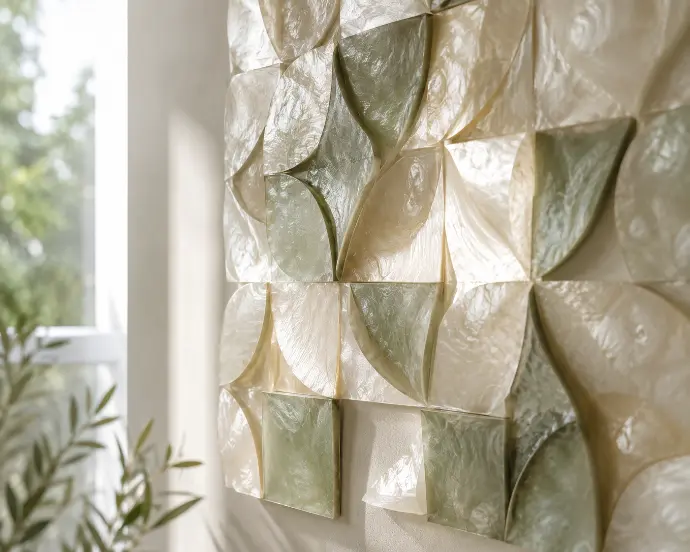
Capiz Wall Installations — Native to the Philippines and historically used in window panes and lanterns, capiz has been reimagined into wall sculptures, geometric installations, and modern light-catching pieces. Holds up well in humidity and naturally fits modern Filipino interiors.
Carved Hardwood Panels — Locally-made narra, mahogany, and acacia wood carvings handle humidity far better than MDF panels and tie into Filipino furniture craftsmanship traditions. Available through Quadro Décor's 3D wall art line and local artisan brands.
Abaca and Woven Fiber Wall Pieces — Sculptural wall hangings using abaca, banig, and rattan weaving create natural texture suited to coastal-tropical, modern-Filipino, and Japandi interiors.
3D Framed Art — Pieces where a textured canvas or sculptural element is set inside a frame, combining the discipline of framed art with the depth of dimensional work. This is one of Quadro's specialties, drawing on its 20+ years of framing expertise.
Where to use 3D Wall Art in a Filipino Home
3D Wall Art creates the strongest impact in spaces where it can serve as a single focal point rather than competing with other visual elements.
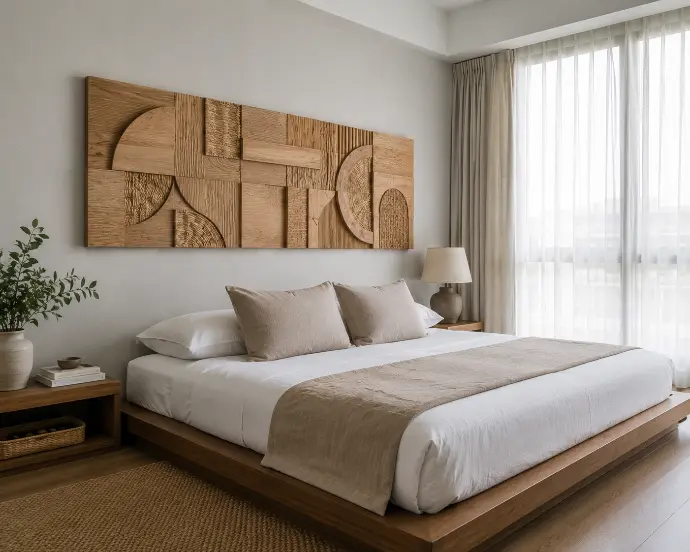
Above the Sofa — The single best location. A 3D wall piece replaces a generic flat print and instantly anchors the living room. For a standard three-seater (200 cm wide), look for a piece or arrangement spanning 130–140 cm.
Above the Headboard or In Lieu of One — A wide horizontal 3D panel can replace a traditional headboard entirely, freeing up floor space in small bedrooms — useful in compact Metro Manila condos.
Entryways and Foyers — A single sculptural piece transforms a transitional space into a curated arrival point. Works especially well when paired with a console table.
Behind the Dining Table — A dramatic 3D piece behind a six-seater dining set creates a hospitality-grade focal wall.
Feature Walls in Open-Plan Condos — In studio or open-plan layouts, 3D wall art on one accent wall helps zone the space visually without physical partitions.
Spaces to Avoid — Direct sunlight (fades wood and canvas), high-traffic corners (risk of bumping into projecting elements), and humid wet areas like bathrooms with poor ventilation (warping risk for wood and MDF pieces).
How to care for 3D Wall Art in Philippine Humidity
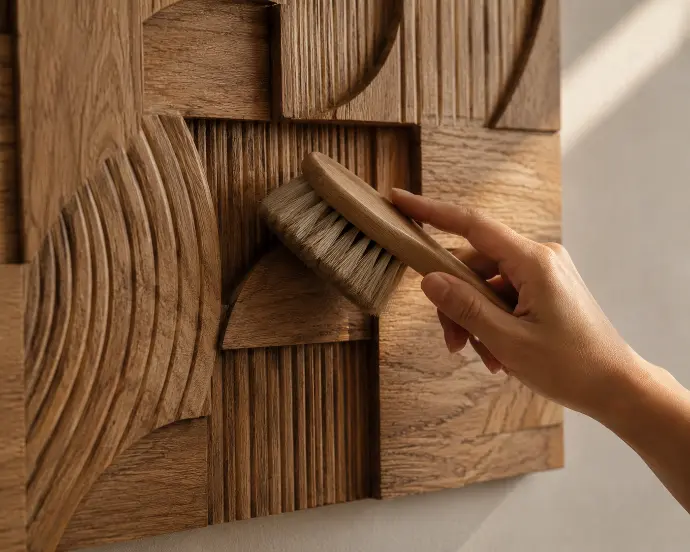
Tropical humidity affects 3D wall art more than flat prints because raised surfaces collect dust and trap moisture. A few maintenance basics:
- Dust Monthly with a soft natural-bristle brush or microfiber cloth. Avoid wet cloths on wood, plaster, and unsealed canvas.
- Keep at least 1 meter from Window-Mounted Aircon Units to avoid direct condensation exposure.
- Use Solid Wood Over MDF for pieces hung in non-airconditioned spaces — MDF swells and delaminates in sustained humidity.
- Reseal Carved Wood Pieces every 2–3 years with a clear furniture wax or matte sealer to preserve color and grain.
- Capiz and Shell Pieces need only occasional dusting; avoid alcohol-based cleaners that dull the natural luster.
People Also Ask
3D wall art is made from a wide range of materials including wood, metal, textured canvas, plaster, ceramic, capiz shell, abaca fiber, resin, and mixed media. The choice of material affects the visual style, weight, durability in humidity, and price.
Yes — 3D wall art is one of the defining trends of 2026 as homeowners move away from flat smooth interiors toward "haptic" tactile finishes. Industry sources including ArtDecoSupply and design publications cite textured and dimensional wall art as the strongest growth category in wall decor for 2026.
Quadro Décor produces 3D wall art as a dedicated product category. Bahia and Balikbayan Handicrafts specialize in modern capiz pieces. Local artisans across Batangas, Laguna, Cavite, and Pampanga also produce wood-carved and metal wall art available through brands like Locsin International and Triboa Bay Living for higher-end pieces.
Neither is universally better — they solve different problems. 3D wall art adds tactile depth and works best as a single focal piece in modern interiors with clean lines. Flat wall art works better in gallery walls and busy spaces where multiple pieces compete for attention.
Yes — a single well-sized 3D piece can actually make a small condo feel more designed because it provides depth and shadow play without taking floor space. The key is scaling the piece to the wall and avoiding clusters that would overwhelm a small room.
Weights vary widely. Textured canvas pieces typically weigh 2–5 kg and work with standard hardwall hooks on Filipino concrete walls. Wood-carved panels can run 5–15 kg and require masonry screws with plastic anchors. Metal sculptures vary; check the manufacturer's weight rating and use anchors appropriate for that weight.