The single most important rule for hanging wall art correctly is to position the center of the artwork between 145 and 152 cm (57–60 inches) from the floor, regardless of room or ceiling height — this is the average eye level for adults and the standard used in galleries and museums worldwide. Above furniture, hang artwork so its bottom edge sits 15–25 cm (6–10 inches) above the top of the sofa, console, or headboard, with the piece spanning roughly two-thirds the width of the furniture below it. For Filipino homes, where most walls are reinforced concrete or hollow block rather than drywall, you'll need masonry-compatible hardware — either heavy-duty hardwall hooks for medium-weight frames or masonry screws with plastic anchors for heavier pieces. This guide covers the rules, the tools, and the most common mistakes.
Rule 1: Hang at eye level (145–152 cm from the floor)
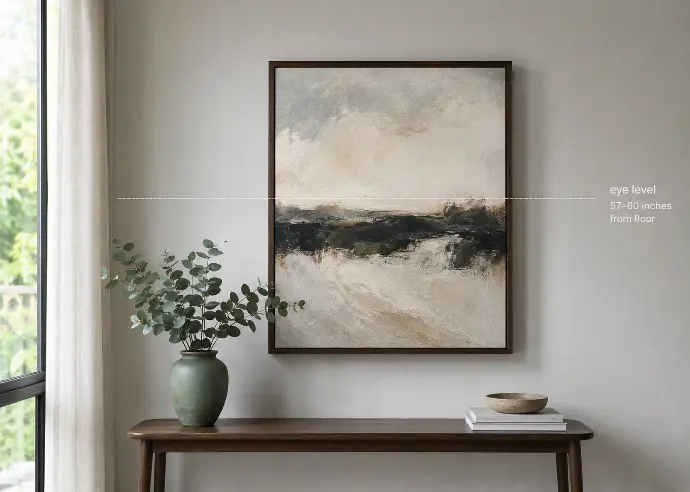
The "57-inch rule" is the gallery standard for a reason — it places artwork at the natural focal point for most viewers, whether seated or standing. To apply it:
- Decide on the spot. Mark the center point on the wall in pencil at 150 cm from the floor (a good Filipino average).
- Measure the artwork's height. Divide by two.
- Add that half-height to the 150 cm mark — this is where the top of the frame should sit.
- Subtract the distance from the top of the frame to the hanging wire or sawtooth bracket — this is where the hook or screw should go.
This works for single pieces on an empty wall. The rule shifts slightly when there's furniture below.
Rule 2: Above furniture, hang 15–25 cm above the top
When wall art sits above a sofa, console, headboard, or sideboard, ignore the 57-inch rule and use the furniture as your reference. The bottom edge of the frame should sit 15–25 cm (6–10 inches) above the top edge of the furniture below. Closer than 15 cm and the piece looks crowded; farther than 25 cm and it floats disconnectedly above the sofa.
For a typical Filipino three-seater sofa (back height around 80–85 cm), this means the bottom of the artwork sits roughly 95–110 cm from the floor, which is also comfortable for both seated and standing viewing.
Rule 3: The two-thirds rule for proportion
A single piece of wall art should be two-thirds the width of the furniture beneath it. For a three-seater sofa at 200 cm wide, that's a piece (or arrangement) spanning roughly 130–140 cm. Anything narrower looks lost; anything wider competes with the sofa.
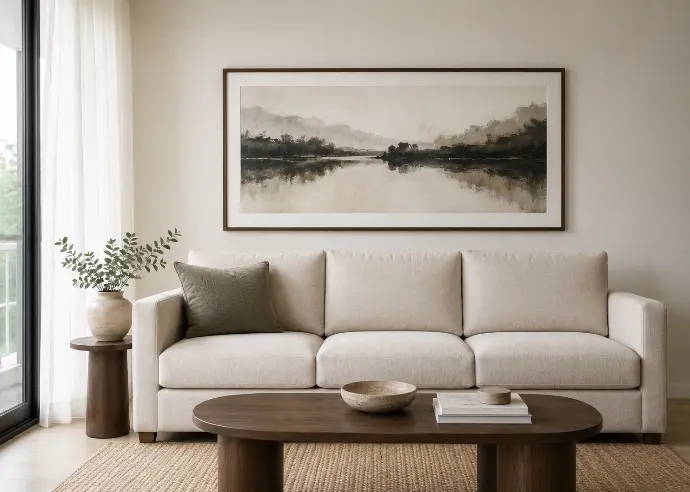
For a console table at 120 cm, aim for artwork or a grouping at 80–90 cm wide. For a queen-size headboard at 152 cm, aim for 100–110 cm wide.
Rule 4: For gallery walls, plan with paper templates first
A gallery wall, three or more pieces grouped together, works only if it's planned. The shortcut:
- Cut paper templates the exact size of each frame.
- Tape them to the wall with painter's tape (won't damage paint).
- Arrange and rearrange until the composition works. Keep 5–8 cm (2–3 inches) between frames — closer for tight groupings, slightly wider for airier layouts.
- Mark hook positions through the paper, then remove the templates and hang.
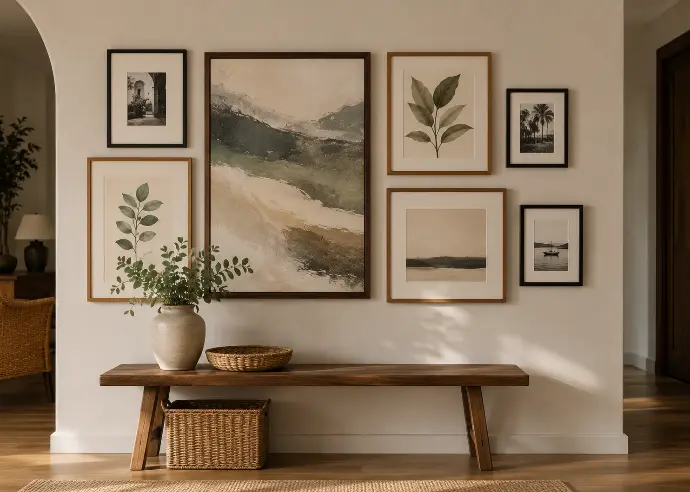
Two reliable gallery wall formulas:
- Grid layout — 3, 4, or 6 same-sized frames arranged in even rows. Best for symmetric spaces like above a bed or behind a dining table.
- Salon style — mixed sizes around a central anchor piece, with smaller pieces radiating outward. Best for stairwells, long hallways, or asymmetric living rooms.
Treat the entire grouping as a single piece for the 57-inch rule: the center of the overall composition should sit at 145–152 cm from the floor.
How to hang wall art on Filipino concrete walls
Most condos, townhouses, and family homes in the Philippines use reinforced concrete or hollow concrete block walls — not the drywall common in North American homes. This changes your hardware options.
For lightweight pieces (under 3 kg) — Use Command adhesive strips or 3M-brand removable hooks. These are renter-safe and leave no holes, but only work on smooth painted surfaces. Wipe the wall with rubbing alcohol first for proper adhesion.
For medium-weight pieces (3–7 kg) — Use hardwall picture hangers (sometimes called "concrete pin hooks"). These have small steel pins that tap into concrete with a hammer, leaving only pinhole-sized marks. Available at Ace Hardware, Wilcon Depot, True Value, and most hardware sari-sari stores.
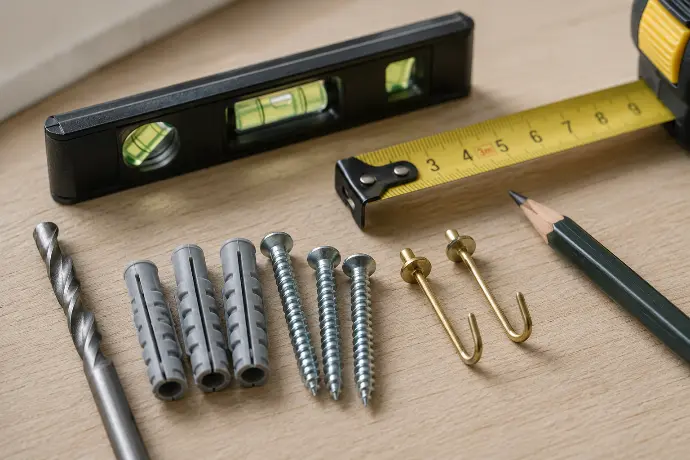
For heavy pieces (over 7 kg) or anything over 80 cm wide — Use masonry screws with plastic wall anchors. You'll need a hammer drill with a masonry bit (typically 6 mm or 8 mm). Drill the pilot hole 1–2 cm deeper than the anchor length, tap in the anchor, and screw in the hook. This is the most secure method for large mirrors and statement art.
For renters or anyone avoiding drilling — A picture rail system (like STAS rails) installed once near the ceiling lets you hang and rearrange pieces indefinitely with hanging cords. Higher upfront cost but zero ongoing wall damage.
Two Filipino-specific considerations:
- Humidity warping. Solid wood frames hold up better than MDF in Philippine humidity. If you're hanging long-term in a non-airconditioned space, invest in solid wood or aluminum frames.
- Condo HOA rules. Some Metro Manila condos restrict drilling on shared walls. Check your building handbook before drilling into a wall that borders your neighbor's unit.
Common wall art mistakes to avoid
A few recurring patterns that ruin otherwise good pieces:
- Hanging too high. The most common mistake. If artwork looks like it's "floating" above your sofa, it's too high — lower it.
- Single small piece on a large wall. A 30 cm print on a 3-meter wall looks like an afterthought. Either size up or build a grouping.
- Mismatched frame finishes in one room. Black frames with brass fixtures, dark wood frames with white-painted millwork — these clashes pull the eye. Match frame finish to your hardware or millwork.
- Hanging right after painting. Wait 48–72 hours after painting before drilling or applying adhesive strips. Adhesives won't hold on freshly painted walls.
- Skipping the level. A 1-degree tilt is invisible on the wall but obvious in a photograph. Use a level — or a smartphone level app — for every piece.
People Also Ask
The center of the artwork should sit at 145–152 cm from the floor (the standard gallery rule). Above a sofa or console, hang so the bottom of the frame is 15–25 cm above the top of the furniture.
For lightweight pieces under 3 kg, use Command adhesive strips on clean painted walls. For slightly heavier pieces, use hardwall pin hooks that tap into concrete with small steel pins, leaving only pinhole marks. For permanent flexibility, install a picture rail system once and hang from cords.
The artwork should be roughly two-thirds the width of the sofa. For a standard three-seater (about 200 cm wide), that's a piece or grouping spanning 130–140 cm. Anything smaller will look lost.
Keep 5–8 cm between frames. Tighter spacing (5 cm) reads as a unified piece; wider spacing (8 cm or more) reads as separate works. Pick one approach per wall and stay consistent.
Yes, but check your lease and condo HOA rules first. Most allow small holes that can be patched. For damage-free options, use Command strips, hardwall pin hooks (which leave only pinholes), or a removable picture rail system.
For most homes: a hammer drill with masonry bits (6 mm or 8 mm), plastic wall anchors, masonry screws, a pencil, a measuring tape, a small level, and painter's tape for templates. For lighter pieces, hardwall pin hooks and Command strips remove most of this hardware list.